
Postgraduate Diploma
Preventative Cardiovascular Medicine

- Validated by
-
- Duration
- 12 months
- Apply by
- 6th Sep 2026
Total fees
£4,950Next intake
September 2026
Apply by
6th Sep 2026
Commitment
Part time
Format
100% online
Duration
12 months
About this programme
Advance your cardiovascular practice with our comprehensive diploma in preventative cardiovascular medicine that puts you at the forefront of groundbreaking advancements. Master the latest innovations in cardiovascular medicine, from revolutionary PCSK9 inhibitors to cutting-edge renal denervation therapies for resistant hypertension.
Deepen your expertise in emerging AI-powered risk stratification tools and novel biomarkers that are transforming early disease detection. Our quick-to-complete programme equips you with practical knowledge in game-changing treatments like bempedoic acid for statin-intolerant patients and the revolutionary application of anti-inflammatory therapies in cardiovascular prevention. Learn to harness the power of digital health technologies, including remote monitoring systems and AI-driven algorithms, to deliver superior patient care through risk management, lifestyle modification, and evidence-based interventions.
Our 100% online cardiovascular diploma has been approved by the Royal College of Physicians of the United Kingdom (RCP), enabling graduates of this programme to receive CPD points as accredited by the RCP.
Join healthcare professionals worldwide in mastering these innovations through our flexible, online learning environment designed for busy clinicians. Stay ahead of the curve as we explore the latest research in genetic risk assessment, inflammation pathways, and personalised medicine approaches that are reshaping cardiovascular prevention. Transform your practice and your patients' outcomes by gaining expertise in the most exciting developments in preventative cardiovascular medicine.
Accredited for CPD by the Federation of the Royal Colleges of Physicians of the UK
Who can study this Postgraduate Diploma in Preventative Cardiovascular Medicine?
This online preventive cardiovascular medicine course is aimed at:
- GPs
- Secondary Care Trainees in Diabetes
- Medical Biochemists
- Junior Doctors
- Paramedics
- Dietitians
- Allied Health Professionals
- Specialist Nurses working in FH and Practice Nurses running CV clinics who wish to develop their skills in this area of work
What will you study on this Postgraduate Diploma in Preventative Cardiovascular Medicine?
Our diploma in preventive cardiovascular medicine allows you to study for just one calendar year and is a part-time, distance-learning course. The course is worth 120 credits and comprises six modules of 20 credits, each running over a period of six weeks.
Year 1
Module 1 Module 1: Principles of Preventative Cardiovascular Medicine +
Module Aims
Develop a critical understanding of the science underpinning preventative cardiovascular medicine and the assessment of cardiovascular risk as applied to clinical practice.
Module Content
Candidates will establish an understanding of the concept of risk and how this applies to traditional and emerging risk factors for cardiovascular disease. They will study the science behind cardiovascular function and how this relates to clinical practice, as well as emerging methods of risk calculation.
Learning Outcomes
- The ability to appraise and apply the use of cardiovascular risk assessment tools in clinical practice and discuss the utility of emerging tools for cardiovascular risk assessment, including imaging techniques.
- An understanding of the pathophysiology of vascular disease and examine its application to current clinical practice.
Module 2 Module 2: Cardiovascular Risk Management +
Module Aims
To develop a critical understanding of nutrition and lifestyle factors in the development of cardiovascular disease.
Module Content
- Factors, other than lipid status and hypertension, may have an important impact on cardiovascular risk. Smoking, nutrition, diabetes mellitus and physical activity are of particular importance. The impact of these factors on cardiovascular disease will be evaluated in detail. Topical issues such as macronutrient and micronutrient content of diet and their impact on cardiovascular disease will be evaluated.
- Candidates will evaluate the role of legislation in prevention of cardiovascular disease.
- Candidates will assess and employ strategies to reduce
Learning Outcomes
- Understand and apply clinical strategies to reduce smoking.
- Understand and appraise the role of dietary modification in the reduction of cardiovascular disease.
- Be able to critically evaluate the role of obesity and physical activity in contributing to cardiovascular disease.
Module 3 Module 3: Lipid Metabolism in Clinical Practice +
Module Aims
To develop a comprehensive understanding of lipid metabolism and disorders, and their presentation and assessment in clinical practice.
Module Content
Lipid metabolism in health and disease and how this relates to clinical presentation. Familial hypercholesterolaemia, the commonest cause of inherited premature cardiovascular disease, will be considered in detail, including the role of family cascade testing in clinical practice. This will also include evaluation of how molecular testing and modern biochemical analysis is enhancing our understanding of lipid disorders in clinical practice.
Learning Outcomes
- Understand lipid metabolism in both health and disease and demonstrate expertise in how different lipid disorders present in clinical practice and their underlying pathophysiology.
- Understand and critically evaluate diagnostic techniques used in the clinical assessment of lipid disorders
Module 4 Module 4: Management of Lipid Disorders +
Module Aims
To critically understand the management of inherited dyslipidaemias, with a particular focus on familial hypercholesterolemia.
Module Content
Management strategies for lipid disorders. Specific non-pharmacological interventions for lipid disorders as well as current and emerging pharmacological therapies will be evaluated.
Learning Outcomes
- The ability to demonstrate a critical understanding of the management of lipid disorders.
- The ability to critically appraise the potential role of novel therapies in the management of lipid disorders.
Module 5 Module 5: Hypertension: Diagnosis and Management +
Module Aims
To develop a critical understanding of the pathophysiology and management of hypertension.
Module Content
Candidates will consider the pathophysiology of hypertension, including genetic determinants. They will evaluate both primary and secondary causes of hypertension. Diagnostic aspects will be considered, such as use of ambulatory monitoring and the use of tests to evaluate secondary hypertension. Modern management of hypertension will be considered in detail, including resistant hypertension.
Learning Outcomes
- The ability to demonstrate a critical understanding of the pathophysiology of hypertension and its diagnosis in clinical practice.
- The ability to critically evaluate the use of current drugs used to treat hypertension and their limitations.
- The ability to critically appraise future targets for the treatment of hypertension.
Module 6 Module 6: Preventative Cardiovascular Medicine in Special Situations +
Module Aims
To gain a critical understanding of preventative cardiovascular medicine in a wide range of relevant clinical conditions.
Module Content
A detailed understanding of the role of preventative cardiovascular medicine in conditions where this is of particular or emerging importance. The examples of diabetes mellitus, renal disease and Human Immunodeficiency Virus (HIV) infection will be considered in detail. The importance of preventative cardiovascular medicine in individuals with mental health conditions and chronic inflammatory disease, such as rheumatoid arthritis will be evaluated. Preventative cardiovascular medicine in children and older people will also be explored in detail.
Learning Outcomes
- The ability to critically evaluate the role of chronic disease in the pathogenesis of cardiovascular disease.
- The ability to discuss strategies for reducing cardiovascular disease in patients with specific medical conditions.
How will I learn?
You’ll learn through our flexible, interactive online platform: clinical cases, assignments and collaboration with fellow students at times that suit your rota. There is no fixed timetable — log in daily to take part in the week’s activities.
Groups are small, typically 10–20 students, so discussion stays close to practice. A dedicated tutor and the Student Support Team stay with you through the module.
-
100% flexible
Online, with no campus days. Study around clinic, nights and family life.
-
Case-based
Two or three clinically rich scenarios each week, discussed with peers and marked by your tutor.
-
About 10 hours a week
A little and often — daily login beats a weekly cram.
Assessment methods
The Preventative Cardiovascular Medicine distance learning course places assessments at the heart of the learning process through the employment of real life scenarios to enhance problem-solving, critical analysis and evidence-based practice. Since the scenarios act as a focus for learning and assessment, the two are intrinsically linked.
The six modules on the course have the same assessment format and for all modules, you will be assigned a dedicated expert tutor. Your tutor will then facilitate case discussions with the group, whilst monitoring, assessing and marking your work throughout. You will also participate in a combination of module activities that may be group and/or individual based, dependent on the module.
These innovative teaching methods enable you to envisage the translation of your studies into your every day work and practice. Due to the online nature of the course, you will be expected to regularly login and participate in the course - ideally on a daily basis. Students are recommended to spend around two hours per day on their studies. Our dedicated Student Support Team are also available to help with any problems you may face. From navigating our online platform to advising you on deadlines, our team can assist with any questions or challenges you may have along the way.
Assessments are built into the learning. Each week you work through clinical cases with your tutor; those discussions are the core of both the teaching and the marks.
Academic Forum - 40% +
- Every week students are presented with two/three clinical case-based scenarios that are reflective of every day clinical practice and research.
- Tutors will post a number of questions and prompts to aid students in a formal discussion of each case.
- These discussions are facilitated throughout by your tutor and are then assessed at the end of every module.
Module Assignment - 20% +
For this assessment, students will work on a group assignment and/or an individual assignment.
- Group assignments are designed to hone skills in the multidisciplinary, holistic approach to modern treatments and patient management by requiring group participation in a single piece of work.
- Individual assignments are designed to hone skills in academic career progression through such tasks as reviewing papers, developing scientific posters or abstracts, peer-reviewing, social media activities, patient information leaflets and essays.
Reflective Journal - 10% +
The reflective journal is used by students throughout each module to monitor personal progress. This is guided by weekly feedback from your tutor and is graded at the end of every module. The journal typically includes the following:
- Initial expectations and reasons for taking the course.
- Module and/or personal learning objectives.
- Description of events, issues and learning points within current personal practice.
- Change in every day practice due to knowledge gained on each module.
- A description of what has been learned during the module.
Case-Based Examination - 30% +
- Students are provided with case-based problems in the form of a one-hour timed examination.
- The exam consists of 30 'Single Best Answer' questions.
- Students are required to complete the exam online within the set time.
Entry requirements
Since our courses are conducted entirely online, they are accessible to both UK and international registered healthcare professionals.
Applicants will typically hold a first degree or equivalent (including international qualifications) in a relevant professional healthcare field, such as a medical or nursing degree.
Registered healthcare professionals without these recognised qualifications will be considered on an individual basis and a wide range of prior experience may be taken into account. In some cases, applicants may be asked to submit a piece of work for assessment in order to confirm that they are able to work comfortably at postgraduate level, and demonstrate the requisite clinical and professional knowledge.
Documents required
- A copy of your updated CV including your address and date of birth.
- A copy of your undergraduate degree certificate.
- The name and email address of someone who is able to provide a reference. This can be a work colleague, employer or former tutor.
- A detailed personal statement explaining why you would like to undertake the course.
- A copy of your proof of English competency (see below).
English language requirements
Proficiency in the English language is essential to completing our courses. If English is not your first language, we ask for proof of competency during the application process. We are able to accept an IELTS overall score of 6.0 (with a minimum of 5.5 for each band) or an equivalent qualification.
If you do not meet these requirements, please don’t worry. The University of South Wales run a number of English language programmes to prepare you for your academic studies. You can also contact our admissions team on admissions@learna.ac.uk for more information on the qualifications we accept.
Should you have already successfully completed the 1 year Postgraduate Diploma and wish to convert to the MSc and complete only the second year of the programme this is possible. Please contact our admissions department admissions@learna.ac.uk to find out more.
Faculty

Programme Director
Dr Dev Datta MB BCh (Wales), MD, FRCP, FRCPath

Honorary Programme Advisor
Prof. Raj Thakkar
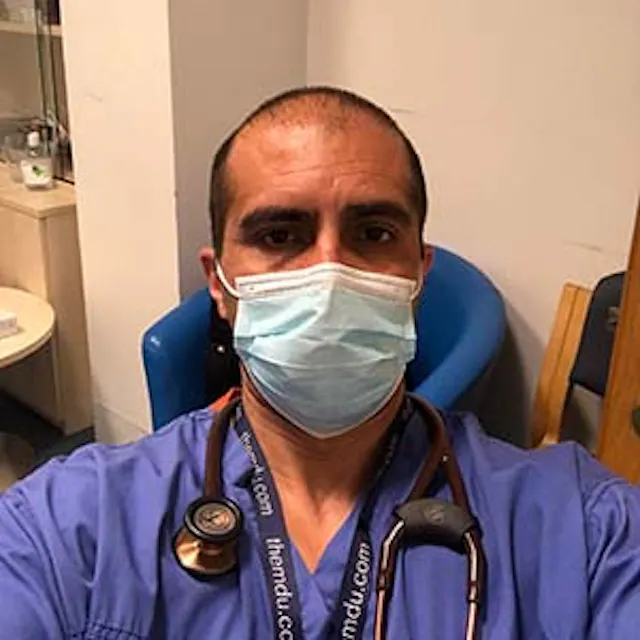
Tutor
Dr. Zahid Khan
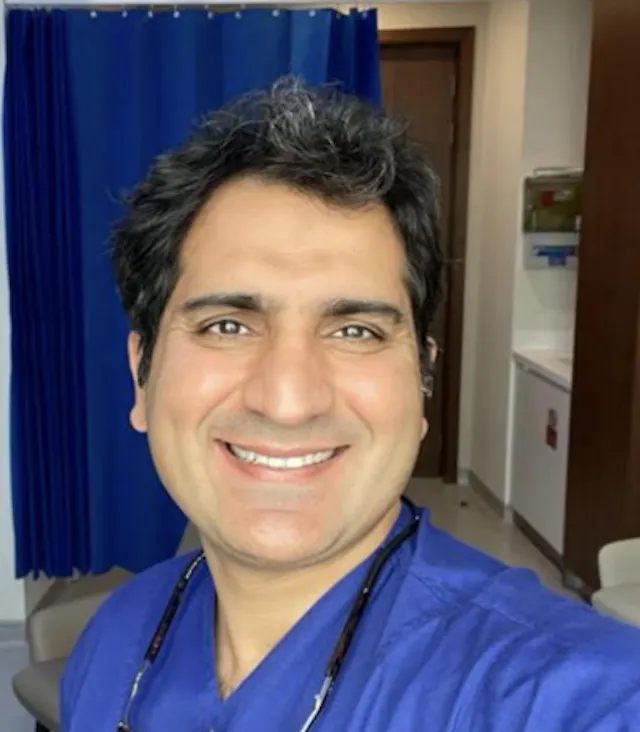
Tutor
Dr Mehmood Butt
1 / 4
Accreditors and Endorsers
University of South Wales
The University of South Wales (USW) is a modern, industry focused University located in Cardiff, Newport and Pontypridd in South Wales, UK. It was rated best in the UK for the Health Professions in the Guardian University Guide 2020 and, in the latest Complete University Guide 2022, is in the top 10 in the UK for Health Studies. USW is one of Britain’s largest and most exciting new universities attracting a cosmopolitan mix of students from across the globe.

Heart UK
This Postgraduate Diploma has been endorsed by Heart UK.
Heart UK members receive a £300 discount on this course.

PCCS - Primary Care Cardiovascular Society
This programme is approved by the Primary Care Cardiovascular Society PCCS.
ELCAS - Enhanced Learning Credits Administration Services
The Enhanced Learning Credits Scheme (ELCAS) is a key Ministry of Defence (MoD) initiative established to promote lifelong learning and support career development for members of the UK Armed Forces, both during and after their service. The scheme provides significant financial assistance towards the cost of higher-level learning, helping service personnel achieve valuable, nationally recognised qualifications.
Royal College of Physicians
Accredited for CPD by the Federation of the Royal Colleges of Physicians of the UK.
Heart UK
This Postgraduate Diploma has been endorsed by Heart UK.
Heart UK members receive a £300 discount on this course.
PCCS - Primary Care Cardiovascular Society
This programme is approved by the Primary Care Cardiovascular Society PCCS.
ELCAS - Enhanced Learning Credits Administration Services
The Enhanced Learning Credits Scheme (ELCAS) is a key Ministry of Defence (MoD) initiative established to promote lifelong learning and support career development for members of the UK Armed Forces, both during and after their service. The scheme provides significant financial assistance towards the cost of higher-level learning, helping service personnel achieve valuable, nationally recognised qualifications.
Royal College of Physicians
Accredited for CPD by the Federation of the Royal Colleges of Physicians of the UK.
Dates
Dates for Postgraduate Certificate / Postgraduate Diploma / MSc Year 1 September 2026 Intake
| Module | Start | End |
|---|---|---|
| Induction Week | 7th September 2026 | 11th September 2026 |
| Module 1 | 14th September 2026 | 25th October 2026 |
| Module 2 | 9th November 2026 | 20th December 2026 |
| Module 3 | 11th January 2027 | 21st February 2027 |
| Module 4 | 8th March 2027 | 18th April 2027 |
| Module 5 | 3rd May 2027 | 13th June 2027 |
| Module 6 | 28th June 2027 | 8th August 2027 |
Dates for MSc Year 2 October 2026 Intake
| Module | Start | End |
|---|---|---|
| Module 1 (USW) | 12th October 2026 | 20th December 2026 |
| Module 2 (USW) | 4th January 2027 | 25th July 2027 |
| Module 1 (UoB) | 12th October 2026 | 25th July 2027 |
| Module 1 (UoB eMBA) | 12th October 2026 | 9th May 2027 |
Course fees and payment options
Course fees
- Deposit for September 2026
- £440
- Total course fees (UK & international)
- £4,950
Payment options
- Option 1: Upfront payment in full (discount available).
- Option 2: Interest-free monthly payments throughout the course.
Spread the cost with Lendwise, who offer financing options for up to 8 years.
Payment plan breakdown
| Instalment | Amount |
|---|---|
| Deposit | £440 |
| 1st May 2026 | £410 |
| 1st June 2026 | £410 |
| 1st July 2026 | £410 |
| 1st August 2026 | £410 |
| 1st September 2026 | £410 |
| 1st October 2026 | £410 |
| 1st November 2026 | £410 |
| 1st December 2026 | £410 |
| 1st January 2027 | £410 |
| 1st February 2027 | £410 |
| 1st March 2027 | £410 |
Deposits are non-refundable. Prices are subject to review following each intake. Lendwise finance is subject to eligibility.
Frequently asked questions
Are the courses recognised outside of the UK? +
As each Medical Council has their own rules/regulations with regard to Postgraduate study we recommend that you contact your local Medical Council with regard to recognition.
Upon completion of the course the University would invite you to a graduation ceremony and provide your certificate which makes no reference to the fact that the course was studied online and is therefore typically recognised the same as any other UK University qualification.
Rest assured, the overall Postgraduate Diploma carries a total of 1,200 CPD points, with the MSc an additional 600 CPD points, and all official certifications are issued directly by the University.
How do online courses work? +
When you study one of our programmes you may be surprised to find that there are no lectures or seminars. Your learning will be self-directed meaning that rather than being told information you find it for yourself (with tutor guidance and support). We do this via a series of clinically rich scenarios which your tutor will post on our academic forum which you and your classmates will research, respond to and discuss.
You will be assessed through the Academic Forum, Reflective Journal and Assignments. Learning will be carried out using our online learning platform: Moodle.
You can study whenever and wherever you want - our programmes are totally flexible to fit around your other work and life commitments.
How much time will I need to spend on the course each week? +
The course is specifically designed so that part of your study is the application of theory to practice in your day job.
We typically suggest that students aim to log into the Moodle platform daily. We recommend a "little and often" approach for reading, reflection and/or posting. High achieving students will typically spend 1-2 hours dedicated to their studies a day; 10 hours per week is sufficient time to spend on the platform.
Those who cannot dedicate more time than once/twice per week may struggle with the demands of this postgraduate programme.
Is the course completely online? +
Yes, everything is done entirely online through our learning platform, Moodle. You do not need to attend the University.
My international degree was taught in English - do I still need to take an English test to prove my English proficiency? +
All of our courses are delivered in English, so proficiency in the English language is essential for success. If English is not your first language, we require proof of competency as part of your application. We accept the following as proof of English Language skills:
We Accept a Range of English Language Qualifications
While IELTS and TOEFL are among the most commonly used English tests, we understand that students come from diverse backgrounds — and we’re happy to work with you to accept a wide range of other recognised English language qualifications.
We accept IELTS (International English Language Testing System)
Our most commonly accepted test, IELTS is globally recognised and widely used for university admissions.
We accept TOEFL (Test of English as a Foreign Language)
Another widely accepted test, TOEFL assesses your reading, writing, listening, and speaking skills in an academic setting.
We accept English Medium of Instruction (EMI) Letters
Many of our international students provide an EMI (English Medium Instruction) letter from their previous institution. This letter should confirm that you were taught in the medium of English. It is a popular and widely accepted form of proof, especially if you have completed prior academic studies in English.
Our University partners Requirements
The University of South Wales accepts an overall score of 6.0 (minimum of 5.5 for each band) and The University of Buckingham accepts an overall score of 6.5 (minimum of 6.0 for each band).
Do you offer any payment plans or funding support? +
Our Flexible Instalment Plan is designed to offer ultimate flexibility to pay for your programme. You have the choice of two payment options:
Make an Upfront Payment in Full: For those who prefer to settle their fees upfront, you can pay the full amount at the beginning of your programme.
Interest-Free Payments: Alternatively, you can choose to spread your payments out with interest-free instalments every month for the duration of your course.
These options are separate from our existing lending partners, which you can explore further on our programme pages. We believe that education should be accessible to all, and our Flexible Instalment Plan is just one of the ways we are committed to supporting you in your academic journey.
What discounts are available, and how much can I save? +
We currently offer two discounts: the Early Bird Discount and the Action Taker Discount. The Early Bird discount allows you to save up to £500 or more, available only to self-funders and is a limited-time offer that runs for the entirety of November for the March cohort or the entirety of May for the September cohort. Our Action Taker Discount allows you to save up to £150 off for PGCert and £250 off for PGDip/2-year MSc programmes. To qualify for Action Takers, you must pay the deposit within 7 days of acceptance.
For Early Bird Discounts, the discount is visible if your application and acceptance are completed within the required timeframe. For Action Taker Discounts, it will reflect once conditions are met.