

- Validated by
-

- Duration
- 24 months
- Apply by
- 6th Sep 2026
Total fees
£8,540Next intake
September 2026
Apply by
6th Sep 2026
Commitment
Part time
Format
100% online
Duration
24 months
About this programme
From treating fractures and performing joint replacements to managing complex musculoskeletal conditions, Orthopaedics is one of the most impactful medical specialties, where a single intervention can restore function and significantly improve a patient’s quality of life.
Our flexible, online two-year Master of Science (MSc) in Orthopaedics is designed to expand your expertise, advance your career, and enhance patient outcomes. You will gain an in-depth understanding of musculoskeletal conditions, develop evidence-based treatment strategies, and collaborate with multidisciplinary teams to drive innovation in orthopaedic care.
With musculoskeletal cases accounting for at least 20% of general practice visits and up to 30% of A&E attendances, there is a growing need for specialists who can navigate the complexities of orthopaedic medicine.
This comprehensive MSc programme combines academic rigour with practical clinical insights, ensuring you acquire the advanced skills and knowledge required to excel in modern orthopaedic practice. The curriculum follows a case-based learning approach and explores the latest advancements in musculoskeletal medicine, covering key areas such as trauma management, degenerative joint diseases, paediatric orthopaedics, and sports injuries. As part of the programme, you will undertake an independent research project, contributing original insights to the field.
Take the next step in your orthopaedic career with this advanced qualification and make a meaningful impact in musculoskeletal healthcare.
Who can study this MSc in Orthopaedics?
This online Orthopaedics course is aimed at:
Nurses- Enhance skills for when working in wards, dealing with orthopaedic issues in a range of settings. Gain a better understanding of the subject to better treat patients within the field. Address shortage of specialists in the subject area, caused by the COVID-19 pandemic.
Doctors- Widen portfolio of medical expertise to further career opportunities within the discipline of orthopaedics. Gain in-depth knowledge of the latest surgical and biomechanical techniques to meet local, regional and national needs for managing orthopaedic trauma. Address shortage of specialists in the subject area, caused by the COVID-19 pandemic.
Our target market is not limited to the categories mentioned above, and all those who wish to learn how to apply the fundamentals of orthopaedics to benefit suffering patients.
Medical graduates (in related fields such as Biomedical Science and/or Dietetics): Following the completion of this programme students will be able to extend their knowledge and understanding of the speciality of orthopaedics, while furthering their career progression opportunities.
Anaesthetists: The successful completion of this programme would further the individuals understanding of orthopaedics, and would aid in their career advancement. While there is no subspeciality for orthopaedic anaesthesia, the individual would be able to list it as a special interest.
Operating department staff and allied health professionals: The successful completion of this programme would allow operating department staff and allied health professionals to further their knowledge surrounding orthopaedics, which would increase their ability to effectively treat and assist any patients.
Surgical Care Practitioners (SCPs)
Assisting in Surgery: SCPs assist orthopaedic surgeons during operations, helping to increase the number of surgeries that can be performed and ensuring high standards of care during procedures.
Patient Management: They also manage pre- and post-operative care, reducing the burden on surgeons and ensuring continuity of care.
International practitioners: Following the completion of this programme international practitioners would have an increased knowledge of common orthopaedic conditions, such as musculoskeletal disorders. This will aid in their diagnosis, treatment and care of patients who otherwise would not be able to access treatment due to a shortage of Orthopaedic surgeons in their area.
What will you study on this MSc in Orthopaedics?
The Orthopaedics MSc is a two-year course, consisting of eight modules (180 credits) with the first 120 credits deriving from the Postgraduate Diploma.
The second year of the MSc Orthopaedics starts with an initial 10-week online module that will develop skills in critical appraisal and knowledge of research methodologies. Students then complete the professional project module, which consists of a 1,500 word proposal and 10,500 word professional project (dissertation).
Year 1
Module 1 Module 1: Advanced Principles in Trauma and Orthopaedics +
Module Aims:
To equip healthcare professionals with in-depth knowledge and understanding of the fundamental aspects of trauma and orthopaedics, focusing on anatomy, biomechanics, the healing process, X-ray interpretation, and clinical examination techniques.
Module Summary
- Fundamentals of trauma and orthopaedics
- Detailed anatomy relevant to T&O
- Biomechanics of musculoskeletal systems
- Healing processes of bones and tissues
- Principles and techniques of X-ray interpretation
- Clinical examination methods in orthopaedics
Learning Outcomes
- Demonstrate a systematic understanding of anatomy, biomechanics, healing processes, X-ray interpretation, and clinical examination in trauma and orthopaedics (T&O).
- Critically analyse and evaluate complex information and research findings related to advanced principles of trauma and orthopaedic care.
- Apply advanced knowledge to clinical scenarios, in a range of settings, by synthesising and interpreting complex findings that are communicated effectively for patient management within a multidisciplinary team approach.
Module 2 Module 2: Orthopaedic Trauma and Emergencies +
Module Aims:
To equip students with an advanced knowledge and understanding of orthopaedic trauma and emergencies. This module focuses on the principles and practices of managing acute injuries, emergency interventions, and post-traumatic care in orthopaedics.
Module Summary:
- Introduction to orthopaedic trauma and emergencies
- Classification and management of fractures
- Emergency care protocols and triage
- Surgical and non-surgical interventions
- Case studies and practical applications
Learning Outcomes
- Demonstrate a critical knowledge and understanding of the principles governing the management of orthopaedic trauma and emergencies, including comprehensive fracture classification and the application of rigorous emergency care protocols.
- Systematically analyse and critically evaluate complex trauma cases to develop and justify evidence-based management plans grounded in current evidence and best practices.
- Apply advanced knowledge of emergency interventions, including initial stabilisation and appropriate surgical or non-surgical treatments.
Module 3 Module 3: Paediatric Orthopaedics (Elective and Trauma) +
Module Aims:
To equip students with an in-depth knowledge of paediatric orthopaedics, focusing on both elective and trauma cases. This module aims to equip students with the knowledge and understanding necessary to diagnose, manage, and treat orthopaedic conditions in children.
Module Summary:
- Introduction to paediatric orthopaedics
- Common elective orthopaedic conditions in children
- Trauma-related orthopaedic injuries in children
- Diagnostic methods and imaging techniques and non-accidental injury (NAI)
- Surgical and non-surgical treatment options
- Postoperative care and rehabilitation
Learning Outcomes:
- Critically apply a systematic understanding of the principles and practices of paediatric orthopaedics to a range of settings, encompassing both elective and trauma-related conditions.
- Critically appraise and synthesise information from clinical assessments and imaging studies to formulate and justify advanced management plans for paediatric orthopaedic patients.
- Apply and critically evaluate advanced clinical skills in diagnosing, treating, and managing paediatric orthopaedic conditions, ensuring evidence-based practice and patient-centred care.
Module 4 Module 4: The Spine (Trauma and Elective) +
Module Aims:
To equip healthcare professionals with an advanced understanding of the spine, covering both trauma and elective conditions, with an emphasis on diagnosis, management, and treatment strategies.
Module Summary:
- Anatomy and biomechanics of the spine
- Pathophysiology of spinal trauma
- Elective spinal conditions
- Diagnostic imaging of the spine
- Surgical management of spinal conditions
- Non-surgical management and rehabilitation
Learning Outcomes:
- Critically evaluate the latest research and evidence-based practices related to the anatomy, biomechanics, pathophysiology, and treatment options for spinal conditions, both traumatic and elective.
- Critically implement knowledge into a patient-centred approach to diagnose, manage, and treat a variety of spinal conditions, considering the individual’s needs, preferences, and overall well-being.
- Demonstrate advanced critical thinking and problem-solving skills that may be applied when integrating diagnostic imaging interpretation, developing comprehensive treatment plans, and implementing evidence-based rehabilitation strategies for spinal conditions in a range of multidisciplinary settings.
Module 5 Module 5: The Upper Limb +
Module Aims:
To equip students with an advanced understanding of the anatomy, pathology, clinical examination, and treatment modalities related to the upper limb in the field of orthopaedics.
Module Summary:
- Anatomy and biomechanics of the upper limb
- Common injuries and conditions of the shoulder
- Common injuries and conditions of the elbow
- Common injuries and conditions of the wrist and hand
- Surgical treatment options for upper limb conditions
- Non-surgical treatment and rehabilitation
Learning Outcomes:
- Demonstrate a comprehensive knowledge and understanding of the anatomical and pathological features of the upper limb, and critically evaluate the latest research and evidence-based practices relating to clinical and imaging techniques used in diagnosis and treatment.
- Critically evaluate the latest research and evidence-based practices related to upper limb conditions and their management.
- Select and adapt appropriate advanced problem solving strategies, and clinical examination methodologies to interpret complex imaging results to design patient-centred treatment plans for upper limb disorders, applying a shared decision-making approach.
Module 6 Module 6: The Lower Limb +
Module Aims:
To equip students with an advanced understanding of the anatomy, biomechanics, pathophysiology, and clinical management of conditions affecting the lower limb, including the hip, knee, ankle, and foot.
Module Summary:
- Anatomy and biomechanics of the lower limb
- Common injuries and conditions of the hip
- Common injuries and conditions of the knee
- Common injuries and conditions of the ankle and foot
- Surgical treatment options for lower limb conditions
- Non-surgical treatment and rehabilitation
Learning Outcomes:
- Demonstrate a comprehensive knowledge and understanding of the anatomical, biomechanical, and pathological aspects of lower limb conditions, and the principles of their management.
- Critically analyse complex clinical cases involving the lower limb, systematically evaluate the latest evidence-based treatment options, and collaborate effectively with multidisciplinary teams to construct patient specific treatment and management strategies.
- Synthesise advanced clinical assessment skills to conduct comprehensive clinical assessments of lower limb conditions, critically interpret diagnostic imaging, and formulate evidence-based treatment plans in a range of multidisciplinary settings.
Year 2
Module 1 Module 7 (MSc): Professional Project +
Research Methodologies and Critical Appraisal:
- Terminology used in epidemiology and research studies such as prevalence, incidence, sensitivity, specificity, false positive and false negatives.
- Interpreting graphical representation of epidemiological and statistical data such as Kaplan-Meier curves, forest plots and meta-analyses.
- Calculations used in the assessment of research data such as relative risk, absolute risk and number needed to treat. Statistical tests and their applications including t-tests, ANOVA and chi-square.
- Qualitative research methods.
- Fundamentals of evidence-based practice and its application into the clinical setting.
- Principles of health economics, audit and quality improvement/assurance systems.
- Establishing patient registers and the value of disease-specific registers.
- Research into educational principles for both healthcare practitioner and patient.
Professional Project:
This module will depend on the creation of a piece of work based upon a specific clinically related project relevant to the student’s practice. This project may comprise:
- Literature review and appraisal of the evidence.
- Audit of practice including organisational or clinical.
- Review and implementation of evidence-based practice.
- Qualitative or quantitative research (formal research involving human subjects is not anticipated).
- Case(s)-based and quality of service review with critical appraisal.
- Case report, review of literature and organisational assessment.
Learning Outcomes:
- Select and apply different methodological perspectives and tools to answer research questions in the field.
- Critically analyse and interpret relevant research in the subject area.
- Design and undertake a research/development project.
- Critically evaluate practice and suggest improvements or change.
- Incorporate knowledge of the research process in developing services appropriately.
How will I learn?
You’ll learn through our flexible, interactive online platform: clinical cases, assignments and collaboration with fellow students at times that suit your rota. There is no fixed timetable — log in daily to take part in the week’s activities.
Groups are small, typically 10–20 students, so discussion stays close to practice. A dedicated tutor and the Student Support Team stay with you through the module.
-
100% flexible
Online, with no campus days. Study around clinic, nights and family life.
-
Case-based
Two or three clinically rich scenarios each week, discussed with peers and marked by your tutor.
-
About 10 hours a week
A little and often — daily login beats a weekly cram.
Assessment methods
Assessments are built into the learning. Each week you work through clinical cases with your tutor; those discussions are the core of both the teaching and the marks.
Academic Forum 40% +
- Case problems reflective of day-to-day practice/research will be presented for the students to consider and answer every week.
- Students discuss the concepts being presented in the case within their online group discussion forum, facilitated throughout the module by their tutor and marked by them at the end of the module.
- The content of the academic forum is based on the learning outcomes for the module.
Module Activity 20% +
This can be either a Group Activity or an Individual Activity:
Group activity
Designed to stimulate and test the students’ ability to work as a team in taking the subject area forward. A group task is set, the group elects a leader using the online forum and the leader allocates tasks to group members. The leader is responsible for managing, collating and submitting the activity (online) at the end of the module. The tutor provides formative guidance part way through the module and marks the assessment at the end.
or
Individual activity
Designed to stimulate and demonstrate personalised learning, creativity and problem solving with application to each student’s own practice area.
Examples of individual activities might include either a written assignment, developing an academic poster presentation, a blog or social media project.
All students must complete the same assignment for each module which is pre-determined by the Programme Leader before the modules commence.
Reflective Journal 10% +
The online reflective journal is a learning portfolio that requires students to record and critically reflect on their learning. Reflection is an important aspect of the programme since the professionals will be able to spend time considering how their practice compares to the themes being discussed in the module. The tutor provides feedback to the student weekly and marks it at the end of the module. Reflective practice is a requirement for healthcare professionals for professional re-validation and professional development.
Exam 30% +
- Case problems in the form of a one-hour timed examination with multiple-choice questions directly test the reasoning and knowledge objectives of the module.
- The online exam is marked automatically.
- The examination tests related theory and problem-solving skills.
Entry requirements
Since our courses are conducted entirely online, they are accessible to both UK and international registered healthcare professionals.
Applicants will typically hold a first degree or equivalent (including international qualifications) in a relevant professional healthcare field, such as a medical or nursing degree.
Registered healthcare professionals without these recognised qualifications will be considered on an individual basis and a wide range of prior experience may be taken into account. In some cases, applicants may be asked to submit a piece of work for assessment in order to confirm that they are able to work comfortably at postgraduate level, and demonstrate the requisite clinical and professional knowledge.
Documents required
- A copy of your updated CV including your address and date of birth.
- A copy of your undergraduate degree certificate.
- The name and email address of someone who is able to provide a reference. This can be a work colleague, employer or former tutor.
- A detailed personal statement explaining why you would like to undertake the course.
- A copy of your proof of English competency (see below).
English language requirements
Proficiency in the English language is essential to completing our courses. If English is not your first language, we ask for proof of competency during the application process. We are able to accept an IELTS overall score of 6.5 (with a minimum of 6.0 for each band) or an equivalent qualification.
If you do not meet these requirements, please don’t worry. The University of Buckingham run a number of English language programmes to prepare you for your academic studies. You can also contact our admissions team on admissions@learna.ac.uk for more information on the qualifications we accept.
Should you have already successfully completed the 1 year Postgraduate Diploma and wish to convert to the MSc and complete only the second year of the programme this is possible. Please contact our admissions department admissions@learna.ac.uk to find out more.
Faculty
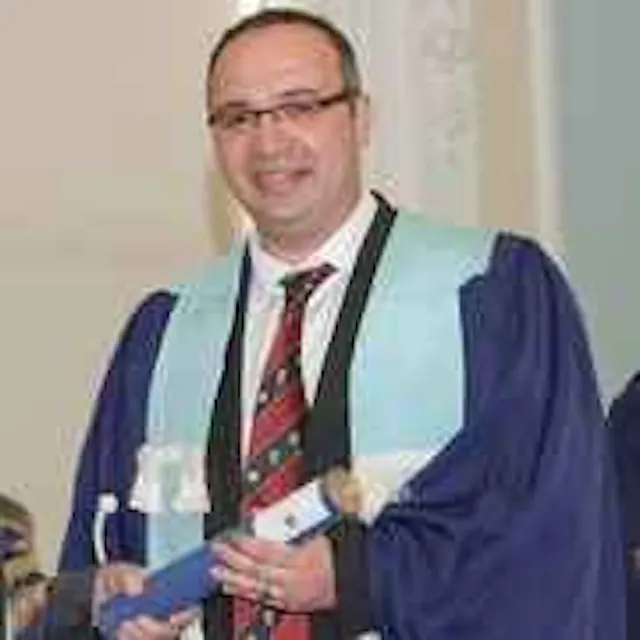
Programme Director
Dr Firas Arnaout MD MSc FRCS (Tr&Orth)
Validated by
University of Buckingham
The University of Buckingham is the only independent university in the UK with a Royal Charter, and also one of the smallest with around 2,700 students, who study for honours degrees in two intensive years of study. The University houses its own medical school and was ranked first for student satisfaction in 2018, 2019 and 2020 by the Complete University Guide.
Dates
Dates for Postgraduate Certificate / Postgraduate Diploma / MSc Year 1 September 2026 Intake
| Module | Start | End |
|---|---|---|
| Induction Week | 7th September 2026 | 11th September 2026 |
| Module 1 | 14th September 2026 | 25th October 2026 |
| Module 2 | 9th November 2026 | 20th December 2026 |
| Module 3 | 11th January 2027 | 21st February 2027 |
| Module 4 | 8th March 2027 | 18th April 2027 |
| Module 5 | 3rd May 2027 | 13th June 2027 |
| Module 6 | 28th June 2027 | 8th August 2027 |
Dates for MSc Year 2 October 2026 Intake
| Module | Start | End |
|---|---|---|
| Module 1 (USW) | 12th October 2026 | 20th December 2026 |
| Module 2 (USW) | 4th January 2027 | 25th July 2027 |
| Module 1 (UoB) | 12th October 2026 | 25th July 2027 |
| Module 1 (UoB eMBA) | 12th October 2026 | 9th May 2027 |
Course fees and payment options
Course fees
- Deposit for September 2026
- £405
- Total course fees (UK & international)
- £8,540
Payment options
- Option 1: Upfront payment in full (discount available).
- Option 2: Interest-free monthly payments throughout the course.
Spread the cost with Lendwise, who offer financing options for up to 8 years.
Payment plan breakdown
| Instalment | Amount |
|---|---|
| Deposit | £405 |
| 1st May 2026 | £385 |
| 1st June 2026 | £385 |
| 1st July 2026 | £385 |
| 1st August 2026 | £385 |
| 1st September 2026 | £385 |
| 1st October 2026 | £385 |
| 1st November 2026 | £385 |
| 1st December 2026 | £385 |
| 1st January 2027 | £385 |
| 1st February 2027 | £385 |
| 1st March 2027 | £385 |
| 1st April 2027 | £325 |
| 1st May 2027 | £325 |
| 1st June 2027 | £325 |
| 1st July 2027 | £325 |
| 1st August 2027 | £325 |
| 1st September 2027 | £325 |
| 1st October 2027 | £325 |
| 1st November 2027 | £325 |
| 1st December 2027 | £325 |
| 1st January 2028 | £325 |
| 1st February 2028 | £325 |
| 1st March 2028 | £325 |
Deposits are non-refundable. Prices are subject to review following each intake. Lendwise finance is subject to eligibility.
Frequently asked questions
Are the courses recognised outside of the UK? +
As each Medical Council has their own rules/regulations with regard to Postgraduate study we recommend that you contact your local Medical Council with regard to recognition.
Upon completion of the course the University would invite you to a graduation ceremony and provide your certificate which makes no reference to the fact that the course was studied online and is therefore typically recognised the same as any other UK University qualification.
Rest assured, the overall Postgraduate Diploma carries a total of 1,200 CPD points, with the MSc an additional 600 CPD points, and all official certifications are issued directly by the University.
How do online courses work? +
When you study one of our programmes you may be surprised to find that there are no lectures or seminars. Your learning will be self-directed meaning that rather than being told information you find it for yourself (with tutor guidance and support). We do this via a series of clinically rich scenarios which your tutor will post on our academic forum which you and your classmates will research, respond to and discuss.
You will be assessed through the Academic Forum, Reflective Journal and Assignments. Learning will be carried out using our online learning platform: Moodle.
You can study whenever and wherever you want - our programmes are totally flexible to fit around your other work and life commitments.
How much time will I need to spend on the course each week? +
The course is specifically designed so that part of your study is the application of theory to practice in your day job.
We typically suggest that students aim to log into the Moodle platform daily. We recommend a "little and often" approach for reading, reflection and/or posting. High achieving students will typically spend 1-2 hours dedicated to their studies a day; 10 hours per week is sufficient time to spend on the platform.
Those who cannot dedicate more time than once/twice per week may struggle with the demands of this postgraduate programme.
Is the course completely online? +
Yes, everything is done entirely online through our learning platform, Moodle. You do not need to attend the University.
My international degree was taught in English - do I still need to take an English test to prove my English proficiency? +
All of our courses are delivered in English, so proficiency in the English language is essential for success. If English is not your first language, we require proof of competency as part of your application. We accept the following as proof of English Language skills:
We Accept a Range of English Language Qualifications
While IELTS and TOEFL are among the most commonly used English tests, we understand that students come from diverse backgrounds — and we’re happy to work with you to accept a wide range of other recognised English language qualifications.
We accept IELTS (International English Language Testing System)
Our most commonly accepted test, IELTS is globally recognised and widely used for university admissions.
We accept TOEFL (Test of English as a Foreign Language)
Another widely accepted test, TOEFL assesses your reading, writing, listening, and speaking skills in an academic setting.
We accept English Medium of Instruction (EMI) Letters
Many of our international students provide an EMI (English Medium Instruction) letter from their previous institution. This letter should confirm that you were taught in the medium of English. It is a popular and widely accepted form of proof, especially if you have completed prior academic studies in English.
Our University partners Requirements
The University of South Wales accepts an overall score of 6.0 (minimum of 5.5 for each band) and The University of Buckingham accepts an overall score of 6.5 (minimum of 6.0 for each band).
Do you offer any payment plans or funding support? +
Our Flexible Instalment Plan is designed to offer ultimate flexibility to pay for your programme. You have the choice of two payment options:
Make an Upfront Payment in Full: For those who prefer to settle their fees upfront, you can pay the full amount at the beginning of your programme.
Interest-Free Payments: Alternatively, you can choose to spread your payments out with interest-free instalments every month for the duration of your course.
These options are separate from our existing lending partners, which you can explore further on our programme pages. We believe that education should be accessible to all, and our Flexible Instalment Plan is just one of the ways we are committed to supporting you in your academic journey.
What discounts are available, and how much can I save? +
We currently offer two discounts: the Early Bird Discount and the Action Taker Discount. The Early Bird discount allows you to save up to £500 or more, available only to self-funders and is a limited-time offer that runs for the entirety of November for the March cohort or the entirety of May for the September cohort. Our Action Taker Discount allows you to save up to £150 off for PGCert and £250 off for PGDip/2-year MSc programmes. To qualify for Action Takers, you must pay the deposit within 7 days of acceptance.
For Early Bird Discounts, the discount is visible if your application and acceptance are completed within the required timeframe. For Action Taker Discounts, it will reflect once conditions are met.